

The monthly Janna Mooney Report keeps you informed on current market trends and how they affect you.
SEPTEMBER 2026
HOUSING'S SEASONAL SHIFT
Housing’s seasonal shift is underway, as the Autumn Market ushers in a distinctly different pace from the rest of the year. The Expected Market Time, the speed of the market, is considerably higher than in the spring, and it won’t change much through the Fall Market.
To every child’s delight, Halloween costumes are now on display at Costco. Disneyland transformed its resorts into “Halloween Time” a couple of weeks ago, and Starbucks’ wildly popular Pumpkin Spice Latte (PSL) returned last week. College football kicks into full gear this week, with NFL Week 1 around the corner. The official first day of fall, arrives on Tuesday, September 22nd, yet all the signs are already here: fall has arrived! The Fall Market runs from the very end of August through mid-November, the week before Thanksgiving. From there, housing transitions to the Holiday Market, the year's slowest season.
In Orange County, the typical Fall Market is when both supply (the total number of homes available for purchase) and demand (a snapshot of new pending sales over the prior month) slowly decline at a similar pace. The speed of the market, expected market time (the number of days it takes to sell all Orange County listings at the current buying pace), does not change much.
Advice to SELLERS: The Fall Market requires a meticulous, cautious approach to pricing. Precision pricing is one of the most important factors in successfully approaching the housing market and securing success. Far too many sellers overprice their homes without properly considering every recent comparable closed and pending sale. This careful consideration allows sellers to arrive at a home’s Fair Market Value, the most probable price the market is willing to pay for a home, considering a home’s condition, upgrades, location, and amenities. In today’s market, buyers are unwilling to overpay for a home.
Advice to BUYERS: Do not expect to get a “deal” in today’s market. Although the market is sluggish compared to previous years, there are not enough sellers who “must” sell. Pricing is sticky. Buyers looking for deals and writing lowball offers will not find success. In terms of negotiating power, the Orange County housing market is leaning slightly in favor of buyers, meaning buyers get to call more of the shots. That does not include a major discount in home prices.
With kids back in school and summer vacations just a memory, many people, especially families with school-aged children, prefer to identify a home and sign a purchase contract during the Spring and Summer Markets. As a result, buyer demand slowly falls during the Fall Market.

REALTOR LIFE
Last week, my husband and I traveled to New York to visit my brother but this trip felt very different from my usual trips to the city. With the 25th anniversary of 9/11, there was a deeper sense of reflection.
My husband Aaron, a fire captain, joined more than 30+ firefighters from his department who marched and honored the lives lost and the first responders who ran toward danger that day. Seeing so many firefighters together in that setting was incredibly moving and reminded me once again of the courage and sacrifice of those who serve.
I’ve visited the 9/11 Memorial and Museum before, but being there during the 25th anniversary year felt different. The memorial pools, surrounded by the names of those who were lost, were filled with flowers, flags and personal tributes. It was beautiful, but also incredibly sobering. The Museum does an extraordinary job of preserving the stories—not only of those who were lost, but also of the people who responded and the countless lives forever changed that day.
As a Realtor, I feel incredibly fortunate to have the privilege of assisting so many first responders and their families through my first responder program. I see firsthand the commitment, sacrifice and long hours that come with serving others, and I have such tremendous respect for the families who support them along the way. Being able to help these families with something as important as finding a home or navigating a move is something I never take for granted. This trip was another reminder of just how much their service—and the people behind that service—means to me.
AUGUST 2026
THE LULL PHASE
Housing has cooled considerably since earlier this year and home are taking a bit longer to sell. A telling 64% of all available homes have been on the market for at least one month, and 41% have surpassed two months.
Just about everyone loves to travel. Something is exciting about climbing aboard an airplane in anticipation of a much-needed vacation, often to some new and unfamiliar destination. After checking your bags and making your way through security, many travelers glance up at the electronic departure board only to find that their flight, along with most other flights, has been delayed. The excitement in flying quickly turns to frustration.
Many sellers are experiencing a similar delay. The excitement of coming onto the market, expecting to sell within the first few weeks, has turned to frustration as the wait unfolds to secure a buyer willing and able to write a purchase offer. After many showings and an open house or two, it’s crickets… no offers. Gone are the days of the COVID real estate market, from June 2020 through May 2022, when nearly every home sold instantly. The issue today is that buyer activity is low due to affordability constraints, and seller competition is at its highest level in years.
Housing has reached the mid-point of the Summer Market. By the end of August, after the kids have gone back to school, housing will transition to the Autumn and Fall Market and pick-up slightly before the holidays approach. The Spring Market, the busiest time of the year for pending sales activity, is in the rearview mirror.
The Orange County housing market has entered the “lull phase” of the year, when housing has reached a slower pace, and homes linger on the market for longer. Today’s sellers have to price their homes according to their Fair Market Value to secure a successful outcome in addition to properly prepping the home for sale.
REALTOR LIFE
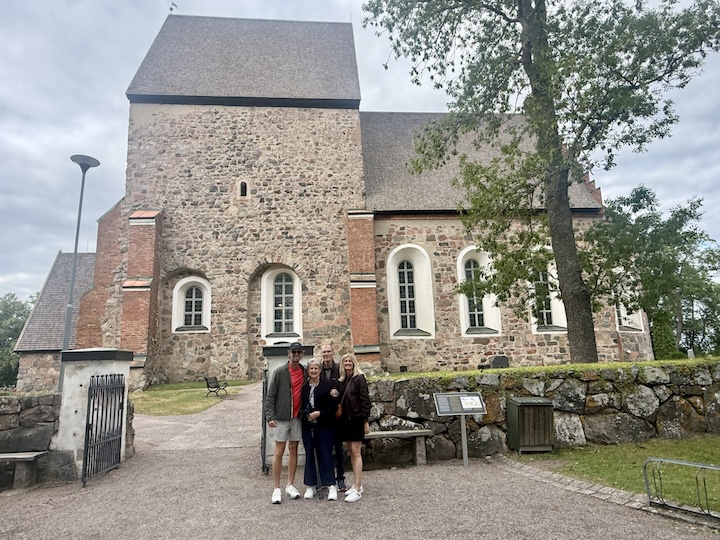
This month's adventure took me somewhere that has become incredibly special to me—Sweden. Five years ago, my parents made the decision to move there after my dad retired, settling into the beautiful university town of Uppsala. I have visited a couple times before but this trip reminded me that as our parents get older, time becomes even more precious. They make the journey to California once a year to see us, and it is just as important for me to make the trip to them. Life has a way of filling our calendars, but the moments we make time for are often the ones that matter most.
In real estate, stepping away isn't always easy—especially for more than a week. There's always another phone call to answer, contract to negotiate, or client to help. But this trip was a reminder that while our careers are important, so is being intentional about making time for family. Those opportunities become fewer as the years go by, and I'm grateful I was able to press pause and be fully present.
This visit was especially memorable because my younger brother was able to experience Sweden for the first time. For ten days, we stepped into my parents' everyday life—morning walks through the forests just across from their home, exploring the charming streets and local restaurants of Uppsala, taking the train into Stockholm to see the sites, and spending a night on the beautiful archipelago island of Sandhamn. We celebrated my dad's birthday, enjoyed more Swedish pastries than we'd like to admit, breathed in the fresh Scandinavian air, and simply slowed down. It was a rare opportunity for my brother and me to spend uninterrupted time together without the busyness of work, spouses, or my nieces, and those simple moments became some of the most meaningful memories of the trip.
While we'll always miss having my parents nearby in California, it's easy to understand why they've fallen in love with this chapter of life. Uppsala offers a slower pace, endless natural beauty, and a quality of life that encourages you to be present. As I returned home, I was reminded that success isn't measured only by busy schedules or accomplishments, but also by making time for the people we love and creating memories we'll carry with us for years to come.
JULY 2026
A BALANCED MARKET
After nearly 4 years of rates above 6%, Orange County home values have stalled amid low demand and rising inventory. Home values in Orange County are up only 1.2% over the past year. Despite a once-in-a-century pandemic, buyers lined up in long lines that wrapped around the block, respectfully maintaining the recommended 5-foot distance behind the buyer in front of them, donning masks, and waiting their turn to tour a home that had just hit the market hours earlier. The catalyst was record-low mortgage rates and a historically low supply of available homes. As a result, home values skyrocketed higher, up 8.2% in 2020, 15.2% in 2021, and 10.5% in 2022.
The Federal Reserve stepped in and started raising rates in March 2022. In response to higher rates, the Zillow Home Price Index shows values initially dropped by 5.4% from June 2022 through March 2023. Home values rose in 2023 despite much higher mortgage rates. The very low demand was matched by a chronically low supply of available homes. In 2024, demand remained at 2023’s very low levels, yet the increase in inventory was not enough to stop the rise in values. In 2025, low demand persisted, and the inventory finally rose enough to stall home price appreciation. The additional supply tilted the scale away from a seller’s market. The scale is now fairly balanced, not favoring sellers or buyers. It has reached a plateau. For now, the housing market is balanced.
REALTOR LIFE
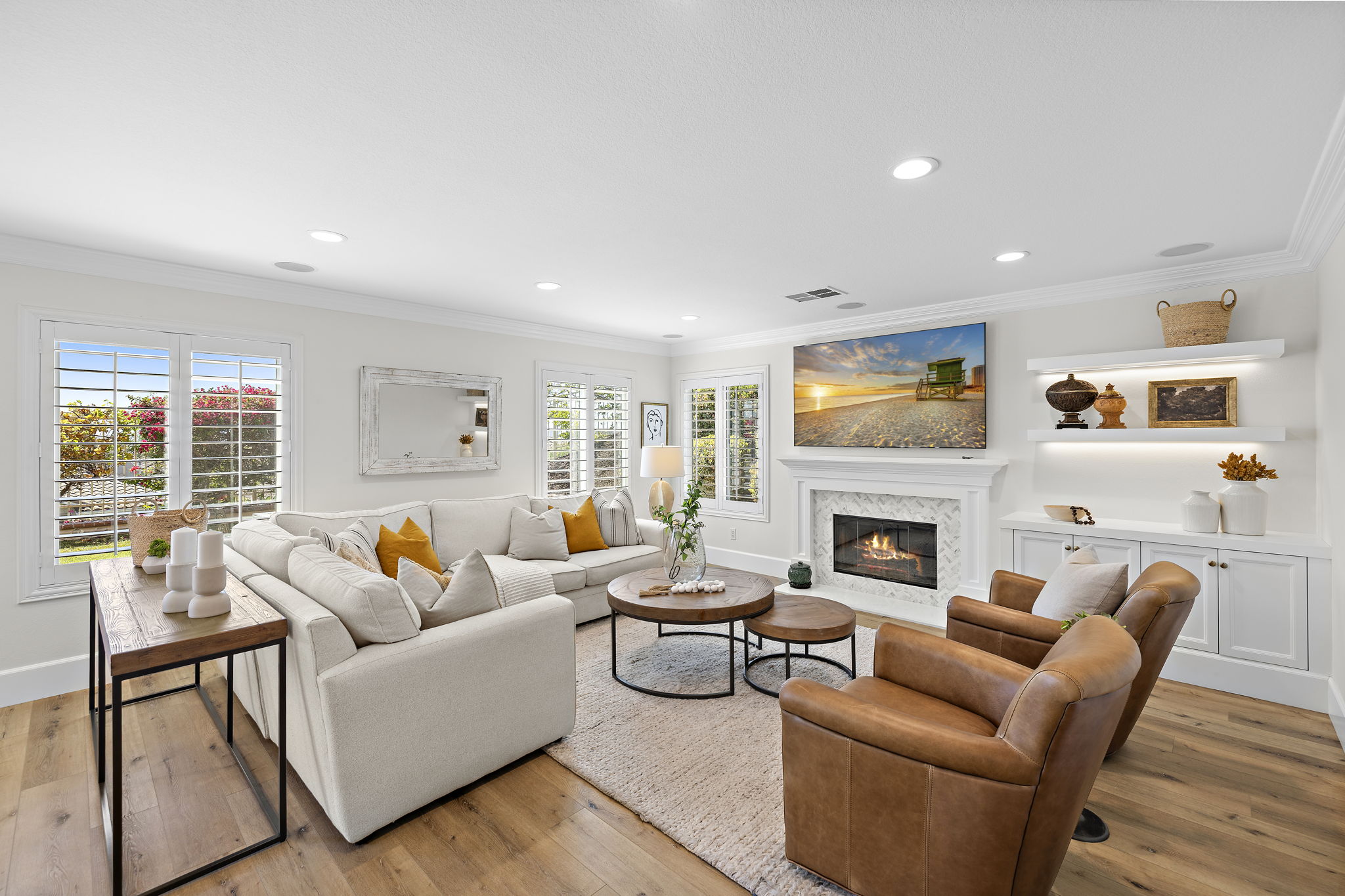
One of my favorite parts of being a Realtor is that I get to experience the market in real time—not just by reading reports, but by walking through homes, negotiating offers, and helping clients navigate each unique situation. The balanced market highlighted in this month's feature isn't just a statistic—it's exactly what I'm seeing every day.
For sellers, the desire to move is definitely still there. The difference is that today's buyers have options, which means preparation matters more than ever. Before a home hits the market, we're focusing on ironing out as many wrinkles as possible—decluttering, staging, making the home shine, and presenting it in its very best light. Just as important is pricing. Pricing a home according to current sold comparable properties—not wishful thinking or last year's market—is absolutely crucial. Homes that miss the mark on price are much more likely to sit on the market, and with today's inventory levels, buyers aren't feeling pressured to overlook that.
I'm also seeing something we haven't experienced much over the past few years: contingent offers becoming part of the conversation again. More transactions are depending on one or even two other homes closing first, and sellers are far more open to considering these offers than they were during the ultra-competitive market. It's another sign that we're settling into a healthier, more balanced environment where both buyers and sellers have room to negotiate.
Even homes that are priced correctly are sometimes taking a little longer to sell simply because buyers have more inventory to choose from. That's not necessarily a sign that something is wrong—it's just the reality of a market where consumers have more choices than they've had in quite some time.
On the buyer side, I'm seeing people become much more intentional with their decisions. They're carefully evaluating a home's condition, asking detailed questions about major repairs and maintenance, and thinking long-term before making an offer. Most buyers don't feel rushed because they know new listings continue to come on the market each week. If the first few homes aren't quite the right fit, they're comfortable waiting for the next one.
JUNE 2026
MARKET TRENDS YOU CAN'T IGNORE
2026 looks a lot like last year, with some subtle differences. Everyone has an opinion on the direction of the housing market. In looking for answers, many turn to ChatGPT, YouTube, Google, or Instagram. The results only add to the confusion, especially with so many clickbait headlines designed to increase views and revenue. It is best to take a step back from all of the opinions and noise and turn to the facts and trends that have surfaced in 2026:
New Listings – There are slightly fewer sellers this year compared to 2025.
Homeowners continue to “hunker down” in their homes, some unwilling to move because of their underlying, locked in, low fixed-rate mortgage unless a need exists. This trend has eased from the lows established in 2023. Inventory had been growing year over year because additional sellers were matched against unchanging, muted demand. With slightly fewer sellers this year, the annual inventory growth has ended as well. The trend of slightly fewer sellers than last year should continue for the remainder of 2026.
Inventory – Starting in May, for the first time since March 2024, there are fewer homes on the market this year compared to last year.
The inventory has not yet reached a peak, but is expected to sometime over the summer between July and August. From there, it will slowly decrease for the remainder of the year. The inventory will drop fast in December during the holiday season when the fewest number of homes come on the market, and many unsuccessful sellers will throw in the towel and pull their homes off the market.
Demand – Buyer activity remains low due to affordability constraints and has not changed much since 2023.
Demand increased rapidly from mid-January through mid-February, up 65% then grew slowly from week to week and appears to have reached its annual peak at the start of Mayr. As long as rates remain between 6.5% and 7%, do not expect demand to change much and break higher. Buyer demand will remain relatively flat through August, and then will slowly fall for the remainder of the year. It will pick up steam during the holidays, when demand drops to its lowest level of the year.
Active Inventory – To remain elevated
The active listing inventory increased over the past two weeks, up 2%, its highest level since September 2025. More homes come on the market from April through July. Demand peaked at the start of May, indicating it has stopped growing and will remain elevated. Yet the number of sellers entering the market will outpace demand, and the active inventory will grow until it reaches its typical summer peak between July and August. That means that seller competition will increase and the market will slow from week to week. Slightly fewer homes have been coming to market this year than last which confirms how there has been not a lot of change.
REALTOR LIFE
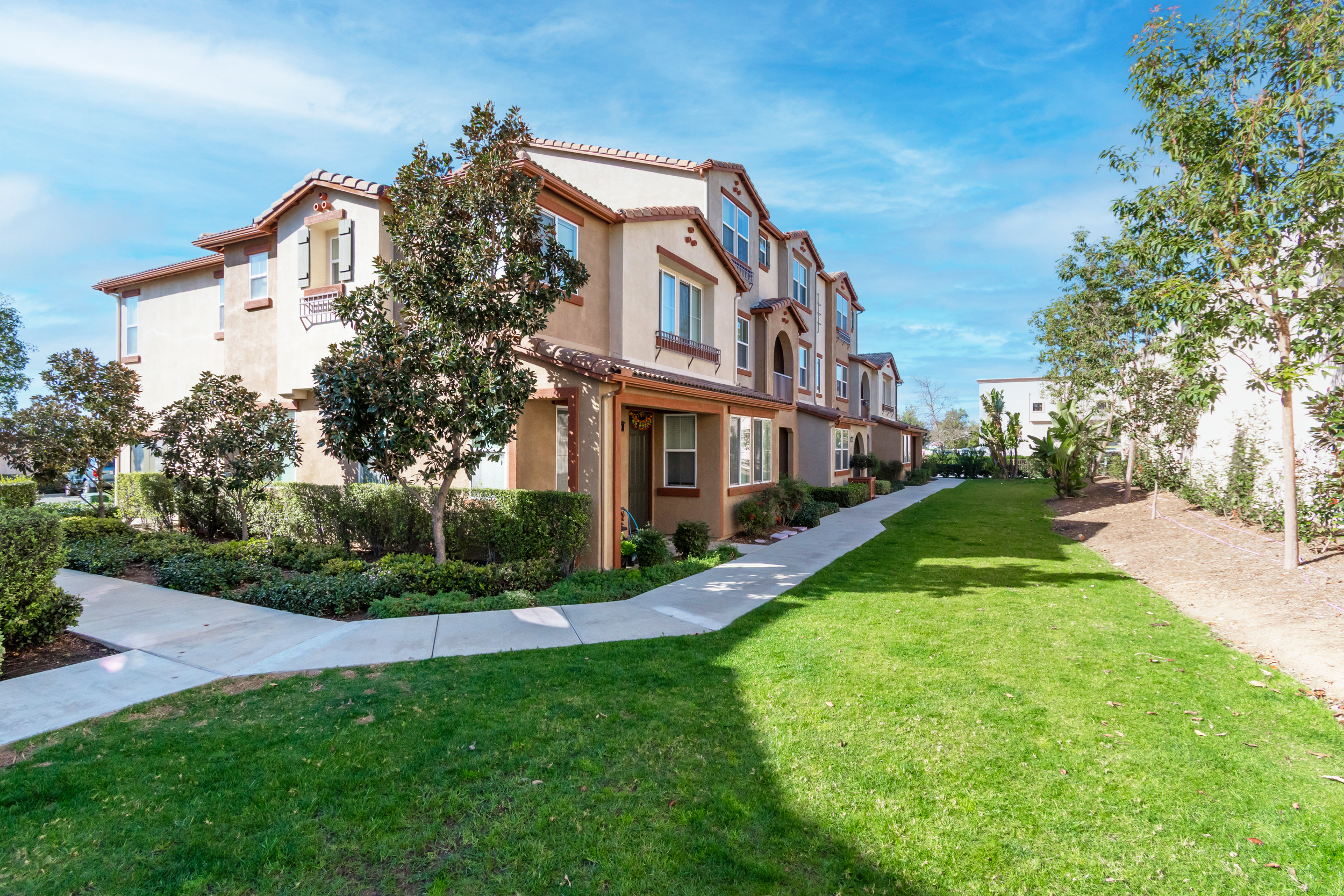
Another successful investment acquisition is in the books.
This recently closed transaction highlights what can still be accomplished in today’s market with the right strategy, persistence, and timing. ThiS property was secured for $60,000 below market value—an increasingly rare opportunity in the current real estate environment.
The transaction came with several layers of complexity, including the sale of another property as part of a 1031 Exchange. Navigating multiple moving parts required patience, creative problem-solving, and strong negotiation throughout the process. Despite the challenges, all parties were able to reach an outcome that created value across the board.
What makes this investment particularly compelling is that escrow closed with a tenant already in place through 2028, providing immediate rental income and positive cash flow for my client from day one.
Opportunities to acquire investment properties below market value don't come along often, but they do exist for buyers who are prepared and positioned to act when the right situation presents itself.
Helping clients identify and secure wealth-building real estate opportunities like this continues to be one of the most rewarding aspects of my business.
